
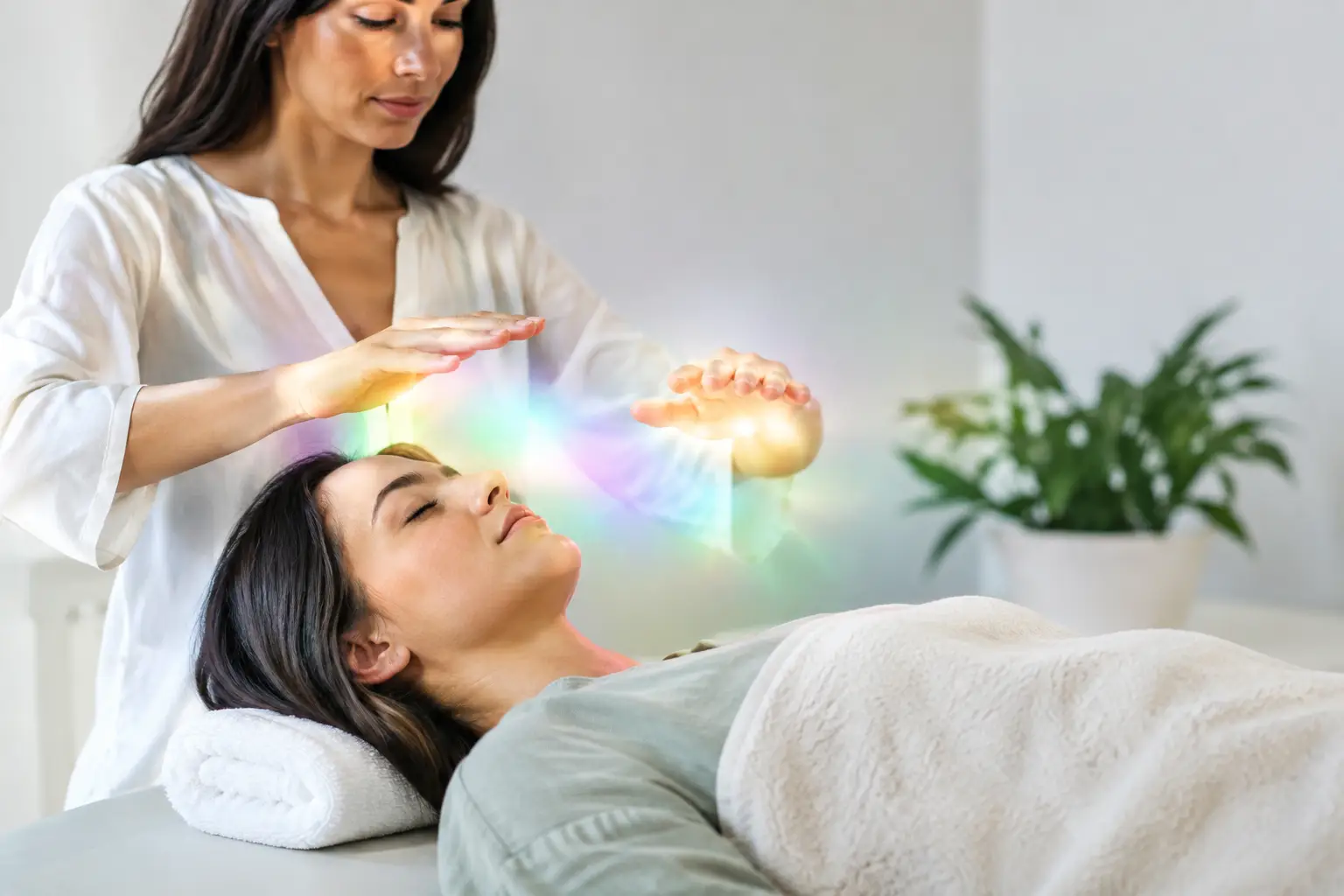
You may leave a Reiki session feeling quiet, open and unexpectedly grounded, yet still wonder what has actually shifted. The conversation around biofield versus reiki therapy begins there: not with a competition between two practices, but with a clearer understanding of the energetic map each one uses.
Both approaches speak to the reality that many people recognise through direct experience: our state is not only mental or physical. It is also energetic. Stress can feel dense before we have language for it. A calm room can regulate the nervous system before a single word is spoken. A conscious ritual with breath, water, touch or intention can help us return to ourselves.
Yet biofield work and Reiki are not interchangeable terms. One is a broad framework for understanding subtle energy and coherence. The other is a distinct healing tradition with a specific lineage, method and ethical practice. Knowing the difference helps you choose with greater clarity, honour the training behind each modality and remain sovereign in your own wellbeing.
What is the biofield?
The biofield is a term used to describe the dynamic field of energy and information understood by many healing traditions to surround and interpenetrate the body. In a spiritual context, it may include the aura, chakras, meridians, emotional residue, ancestral patterns and the subtle currents of life-force energy. In more science-adjacent language, practitioners may speak of electrical activity, magnetic fields, heart coherence and the body’s capacity to respond to signals in its environment.
The word matters because it offers a wide lens. Biofield practice is not one fixed modality. It can include meditation, breathwork, grounding, sound, conscious movement, hands-on or hands-off energy work, frequency-based practices, intention, space clearing and water rituals. Different practitioners may work with different maps, but they share an interest in how energetic patterns relate to vitality, presence and resilience.
For someone living in a high-stimulation environment, the biofield lens can be especially practical. It invites questions such as: What changes in my field when I spend hours around screens? Do I feel more coherent after time outdoors? How does the quality of my water, rest, relationships and inner dialogue affect my energetic boundaries? These are observations, not diagnoses. They are part of learning your own energetic literacy.
Scientific research into biofield concepts is still developing, and many metaphysical claims have not been established by conventional medical science. That does not make personal experience meaningless. It does mean that discernment belongs alongside openness, particularly when physical or mental health concerns need qualified clinical care.
What is Reiki therapy?
Reiki is a Japanese energy-healing practice developed by Mikao Usui in the early twentieth century. Its name is commonly translated as universal life-force energy. In a typical session, a trained practitioner places their hands lightly on or just above the body, allowing energy to flow in support of relaxation, balance and the recipient’s own healing process.
Reiki is traditionally taught through a lineage of attunements and levels of training. While approaches vary among teachers, the practice often includes hand positions, precepts, symbols at advanced levels and a clear intention to serve without forcing an outcome. A practitioner does not need to diagnose, analyse or manipulate a person’s energy. The quality of presence, permission and non-attachment is central.
For many people, Reiki offers a gentle container. It can be received fully clothed, often in stillness, and may feel soothing when life has become loud or emotionally demanding. Some report warmth, tingling, visual impressions or deep rest. Others notice very little during the session but feel calmer later. There is no required sensation for a session to be meaningful.
Reiki is best understood as a complementary wellbeing practice, not a replacement for medical assessment, treatment or mental health support. Ethical practitioners should be comfortable saying this plainly. They should not promise cures, tell clients to stop medication or use fear to make a client dependent on sessions.
Biofield versus Reiki therapy: the essential distinction
The simplest distinction is this: biofield is the wider territory, while Reiki is one pathway through it.
A biofield practitioner may use an eclectic or structured approach informed by frequency, chakra systems, energetic anatomy, environmental influences, somatic awareness or coherent intention. Their work might include teaching you to ground before a busy day, supporting you to notice contraction around certain spaces, or using tools and rituals that encourage a felt return to balance.
A Reiki practitioner works within the Reiki tradition. Their focus is generally on offering Reiki energy through a lineage-based method, rather than assessing every possible layer of a client’s energetic system. Some Reiki practitioners also study other biofield modalities, but Reiki itself remains its own discipline.
This difference is not about which practice is more powerful. It is about precision. If you want a quiet, receptive session held in a recognised energy-healing lineage, Reiki may be the right place to begin. If you want to explore your relationship with frequency, environmental stress, grounding, water consciousness and energetic self-care, a broader biofield approach may speak more directly to your path.
Where they overlap
Both practices may support a sense of peace, spaciousness and reconnection. Both can create a pause from habitual mental noise. Both may help a person become more aware of where they have been over-giving, bracing or carrying emotional weight that is ready to be witnessed.
They also share an important principle: the recipient is not passive. Even when you are lying down receiving Reiki, your willingness to rest, feel and remain present shapes the experience. In biofield work, this participation may be even more explicit. You might be invited to track sensations, practise energetic boundaries or build a daily coherence ritual.
Neither practice needs dramatic language to be valuable. A useful session may simply help you sleep more deeply, make a clearer decision or remember that your energy deserves your attention. Subtle shifts are still shifts.
Choosing the practice that serves you now
Your intention is a better guide than a trend. If you are new to energy work, Reiki can offer a simple and contained first experience. Look for a practitioner who explains their training, asks for consent before touch and creates a calm, non-pressured environment.
If you already have a meditation, grounding or spiritual practice, biofield education may give you a broader vocabulary for what you are noticing. You may be drawn to learning how your field responds to places, technology, hydration, emotional boundaries and daily choices. This can be especially supportive for practitioners, facilitators and highly sensitive people who want repeatable practices rather than occasional appointments alone.
It also depends on your temperament. Some people prefer the gentle surrender of receiving a Reiki session. Others feel most empowered when they are learning to sense, clear and tend their own energy. There is room for both. A well-held Reiki session can complement a self-led biofield routine, just as a regular grounding practice can deepen your capacity to receive.
Be thoughtful about credentials and claims. Ask how a practitioner was trained, what a session involves and how they handle safeguarding, confidentiality and referral. Trust your body’s response, but do not confuse intensity with integrity. The right practitioner will support your agency, not position themselves as the only person who can keep you well.
Bringing biofield awareness into ordinary life
Biofield work becomes most useful when it leaves the treatment room and enters your real routines. Before reaching for your phone in the morning, place both feet on the floor and notice your breath. Drink water with a clear intention. Step outside, feel the ground beneath you and let your attention settle below the mind’s constant commentary.
You can also create a brief energetic check-in after crowded travel, difficult conversations or long periods near devices. Rather than deciding you are depleted or unprotected, become curious. Where do you feel expanded? Where do you feel contracted? What restores a sense of coherence: rest, movement, silence, time in nature, prayer, music, mineral-rich water or a conscious frequency practice?
This is the spirit behind energetic sovereignty. It is not about fearing every external influence. It is about becoming sufficiently present that you can recognise your own baseline and choose practices that help you return to it. Crystal Water Experience approaches this territory through teachings and tools designed to make frequency awareness a lived, repeatable practice.
Reiki may be the doorway. Biofield awareness may become the language you carry into your home, body and relationships. Let your next step be small enough to practise consistently, and quiet enough that you can hear what your own field has been saying all along.