
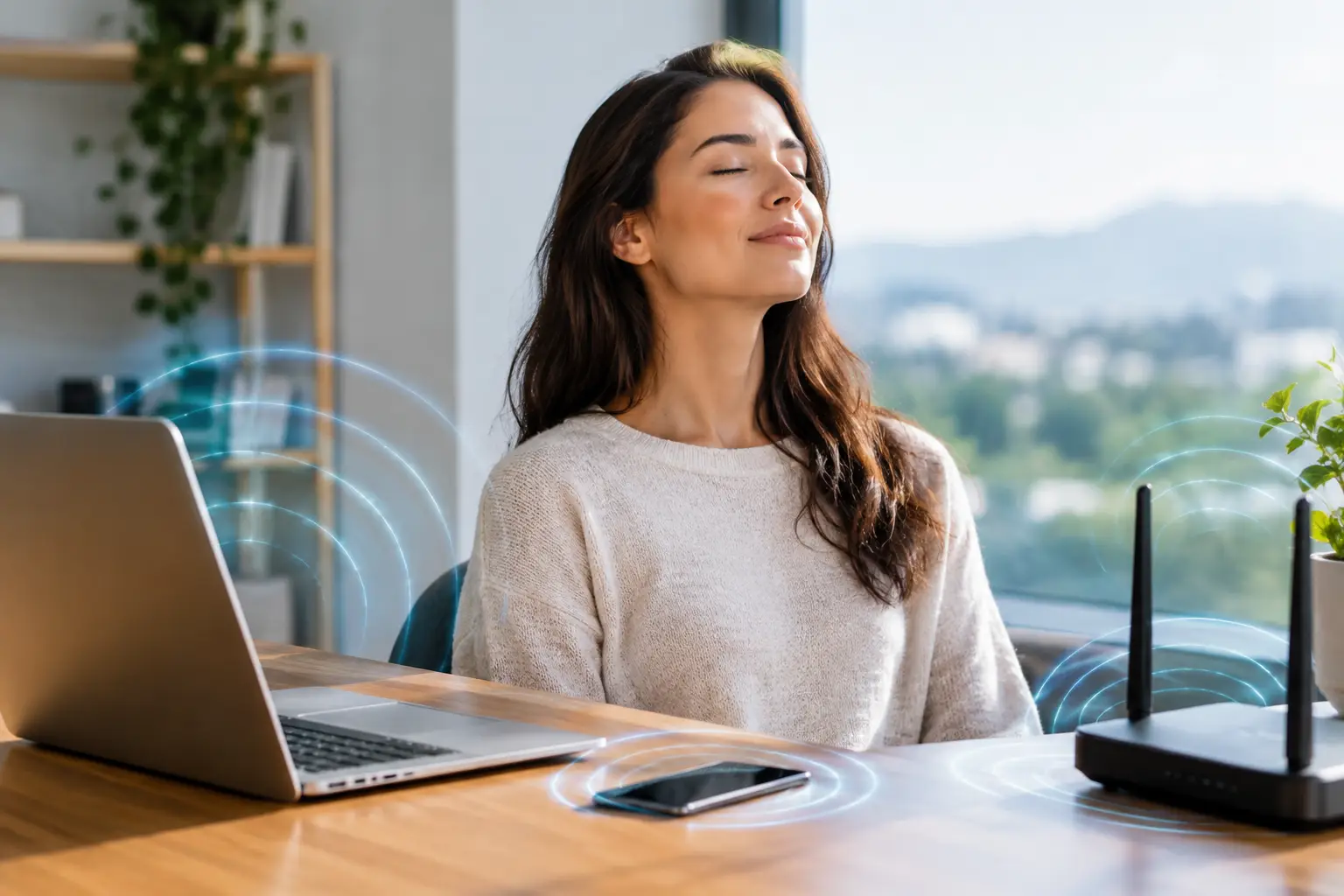
A phone charging beside the bed, a router humming in the next room, wireless earbuds in on the train: the modern energetic environment is rarely still. EMF awareness trends are reflecting a deeper shift in how spiritually attuned people relate to technology. The question is no longer simply whether to avoid every signal. It is how to stay clear, grounded and self-led while living within an increasingly connected world.
For many people, this conversation begins with a felt experience: difficulty settling after a screen-heavy day, a sense of energetic noise in a crowded space, or the intuition that their home needs to feel more restorative. Those observations deserve curiosity, not panic. Energetic sovereignty is built through discernment, practical choices and a relationship with your own inner signal.
EMF awareness trends are moving beyond fear
Earlier conversations around EMF often centred on alarm. The messaging could imply that technology itself was the enemy, and that complete withdrawal was the only meaningful response. That approach is difficult to sustain and can pull attention away from the very coherence people are trying to cultivate.
A more mature movement is emerging. People are learning to distinguish between fear-based vigilance and frequency literacy. They are asking better questions: How much wireless technology is present in my space? When do I feel most depleted? What changes when I create a quieter sleeping environment, take breaks from constant connectivity, or return to the natural rhythms of breath, movement and water?
This does not require claiming certainty where science is still being studied. EMFs are a broad category, and everyday wireless devices produce non-ionising electromagnetic fields. Public-health guidance and research continue to assess exposure, especially as technology changes. Personal energetic practices belong alongside sensible device habits, not in place of medical care, evidence-based safety guidance or professional support when it is needed.
The meaningful trend is agency. Rather than surrendering to either dismissal or alarm, people are choosing to observe, experiment and create boundaries that feel supportive in their own bodies and homes.
The home is becoming an energetic sanctuary
One of the clearest EMF awareness trends is the transformation of the home from a purely functional place into an intentional energetic field. This is not about making a home perfect. It is about recognising that the environments we repeatedly inhabit shape our attention, nervous-system state and capacity to be present.
Bedrooms are often the first place people reassess. A growing number are moving charging devices away from the bedside, reducing unnecessary lights and notifications, and giving themselves a period without screens before sleep. Others choose wired options where practical, switch off wireless functions they do not need overnight, or place their router away from the room where they rest.
The power of these changes is partly energetic and partly behavioural. A quieter room creates an invitation to leave the day behind. It makes space for journalling, breathwork, prayer, meditation or simply being still enough to hear what the body has been communicating.
Living spaces are also becoming more consciously designed. Natural materials, plants, mineral-rich water, sunlight, earthing practices and uncluttered corners can all help create a more coherent atmosphere. No single object can do the work of presence for us. Yet objects, rituals and spatial choices can act as anchors, reminding us to return to ourselves.
From device anxiety to frequency literacy
Frequency literacy is the ability to notice what influences your field and respond with intention. It includes technology, but it does not stop there. A full inbox, unresolved conflict, rushed meals, artificial light and constant background media can be just as disruptive to a person’s sense of inner coherence as the devices themselves.
This wider view is changing the conversation. Instead of treating EMF as an isolated problem, wellness seekers are looking at cumulative energetic load. They are becoming more interested in the quality of their transitions: how they begin the morning, how they reset between meetings, how they travel, and how they close the day.
This is where personal observation matters. One person may feel deeply supported by a technology-free morning. Another may need a midday grounding ritual after working in a busy co-working space. The aim is not to adopt someone else’s rules. It is to develop enough sensitivity that your practices arise from awareness rather than from a trend.
Keeping a simple journal can reveal patterns without becoming obsessive. Notice your sleep quality, mood, ability to focus and felt sense of spaciousness after different routines. Consider what happens when your phone is outside the bedroom, when you take a walk without headphones, or when you pause before opening messages. Treat the process as an exploration of your biofield and daily rhythms, not as a test you must pass.
Water consciousness is entering the conversation
Water is becoming a more visible part of energetic wellbeing practices because it brings people back into relationship with one of life’s most fundamental elements. A glass of water can become more than a hurried necessity. It can be a moment of intention, gratitude and recalibration.
Within consciousness-based traditions, water is often approached as responsive to environment, attention and frequency. While these ideas sit outside conventional clinical frameworks, many people find that bringing care to hydration and ritual strengthens their sense of connection. The practical value is beautifully simple: it interrupts automatic living.
Before drinking, pause. Feel your feet on the floor. Take a breath and bring your awareness to the water in your hands. You might set an intention for clarity, steadiness or energetic boundaries. The intention is not a substitute for hydration, rest or health care. It is a way of bringing the subtle and the tangible into the same moment.
At Crystal Water Experience, this meeting point between water consciousness, quantum frequency and lived practice is central. The deeper invitation is not to hand your power to a tool. It is to use supportive tools as part of a conscious relationship with your own life-force energy.
Protection is becoming a practice, not a product promise
Interest in EMF and biofield-support products continues to grow, particularly among people who work online, travel frequently or spend long periods in technology-dense spaces. This interest can be valuable when it leads to more intentionality. It becomes less helpful when a product is treated as permission to ignore every other aspect of wellbeing.
The most grounded approach holds both truths. Environmental and wearable tools may be meaningful parts of a personal ritual, especially when they help someone remember their intention to stay centred. But energetic protection is also a practice of boundaries. It is choosing not to scroll through distressing content before bed. It is stepping outside after hours under fluorescent lighting. It is saying no to a call when your system is asking for quiet.
A pendant, bracelet or environmental support can be a physical cue for that choice. The real work is the repeated return to coherence. This is why education matters as much as equipment. When people understand their own patterns, they are less likely to chase every new solution and more able to build a practice that lasts.
A simple rhythm for a connected life
You do not need to overhaul your home or abandon modern technology to respond to these trends with integrity. Begin with one transition in your day. Create a device-free first ten minutes after waking, or a closing ritual before sleep. Let your phone charge outside the bedroom a few nights each week and notice what changes.
During the day, use small moments to come back into the body. Stand with bare feet on grass or earth when conditions allow. Drink water without multitasking. Look beyond the screen and soften your gaze towards daylight. Place a hand over your heart before entering a demanding conversation. These actions are modest, but they teach the field that it is safe to settle.
If you choose EMF-support or frequency-based tools, approach them with clear intention and realistic expectations. Ask whether the tool complements your routines, your values and your capacity to stay present. A meaningful practice should expand your autonomy, not make you feel dependent on the next purchase or frightened of ordinary life.
The future of EMF awareness is not a life lived in resistance to technology. It is a life in which technology has a place, while your awareness remains at the centre. Each conscious pause, each grounded choice and each act of listening becomes a quiet declaration: your field is yours to tend.