Water is often described as the most familiar substance in our lives, yet it remains one of the most mysterious. Across cultures, scientific explorations, and modern consciousness studies, people have long wondered whether water responds to attention, environment, and intention.
Today, this curiosity is resurfacing in a new form: water consciousness, the idea that water is the software of life and if we pay close attention, we can see the evidence of this in our everyday lives.
Let’s explore the power of water, beyond the chemistry of H2O and some of the science and history that proves this is more than a molecule; this programs our very reality.
What Is Water Consciousness?
Water consciousness begins with a simple question: if water carries information, what information are you giving it?
Every day, the water within your body is exposed to your thoughts, emotions, environment, relationships, technology, and experiences. Whether consciously or unconsciously, information is constantly being exchanged.
The purpose of water consciousness is not merely to drink water, but to develop awareness of the information we interact with and the influence it may have on our lives. Rather than leaving this process to chance, it invites us to participate intentionally.
At Crystal Water Experience, we explore these principles through experiential learning, consciousness research, and Quantum Frequency Technology, helping people develop a deeper understanding of water, information, intention, and human potential.
If you are curious to explore further, Crystal Water Experience offers courses and workshops that bring together water consciousness, experiential science, and personal reflection.
The Cultural and Historical Roots of Intentional Water Use
Water has held practical, cultural and symbolic importance across many societies. In ancient Greece and Rome, springs, rivers, baths and fountains served everyday needs and were also associated with ritual, purification and sacred spaces. Greek philosophers used water when exploring questions about nature, change and the origins of the world.
Many Indigenous communities have distinct traditions that recognise water as central to life, identity and responsibility to the natural world. In some traditions, water may be spoken of as a relative or living presence. Beliefs and practices differ among communities, so it is worth exploring each tradition on its own terms.
In Eastern philosophy, including Taoist thought, water is often used as a metaphor for flexibility, movement and adapting to changing circumstances. These ideas offer a philosophical way to reflect on water without requiring scientific validation.
In the twentieth century, naturalist Viktor Schauberger observed water movement in natural environments and developed ideas about flow, vortices and the relationship between water and its surroundings. His writing continues to interest people exploring water and nature, particularly his observations about what he described as water’s natural intelligence, expressed through spirals and flow patterns.
Modern explorations, including Emoto’s water photography, Veda Austin’s crystallography, and Pollack’s work on water structuring, continue this lineage by examining how water forms patterns, structures, and shapes under different conditions. You can read more about these and other ideas on the Crystal Water Experience website.
Researchers and Observers Who Shaped Public Interest in Water
Researchers and observers including Masaru Emoto, Veda Austin, Gerald Pollack and Viktor Schauberger have contributed to public interest in water.
Their work spans photography, experimental observation, research into water near surfaces, and naturalist philosophy, offering a rich landscape of perspectives on this remarkable substance.
Masaru Emoto became widely known for photographs of ice crystals formed from water samples under different conditions.
A 2006 pilot study published in the journal Explore examined whether distant intention might affect how people rated photographs of ice crystals. The study reported an interesting result and opened further conversation about the relationship between water, observation, and intention.
Veda Austin has developed her own approach to observing and photographing water crystallisation. She interprets the images through a framework that includes consciousness and symbolism, inviting people to consider water as a subject worthy of deeper attention and reflection.
Gerald Pollack and colleagues have studied water near certain hydrophilic surfaces and proposed explanations for what is often called the exclusion zone, sometimes described in Pollack’s work as a “fourth phase” of water.
A review of water structure, properties and applications summarises the proposed model alongside other research in this area.
Taken together, these perspectives show the range of ways people have tried to understand water. They provide questions for further reading and exploration, and an invitation to think more deeply about the substance that surrounds and sustains us.
Conscious Water Drinking in Everyday Life
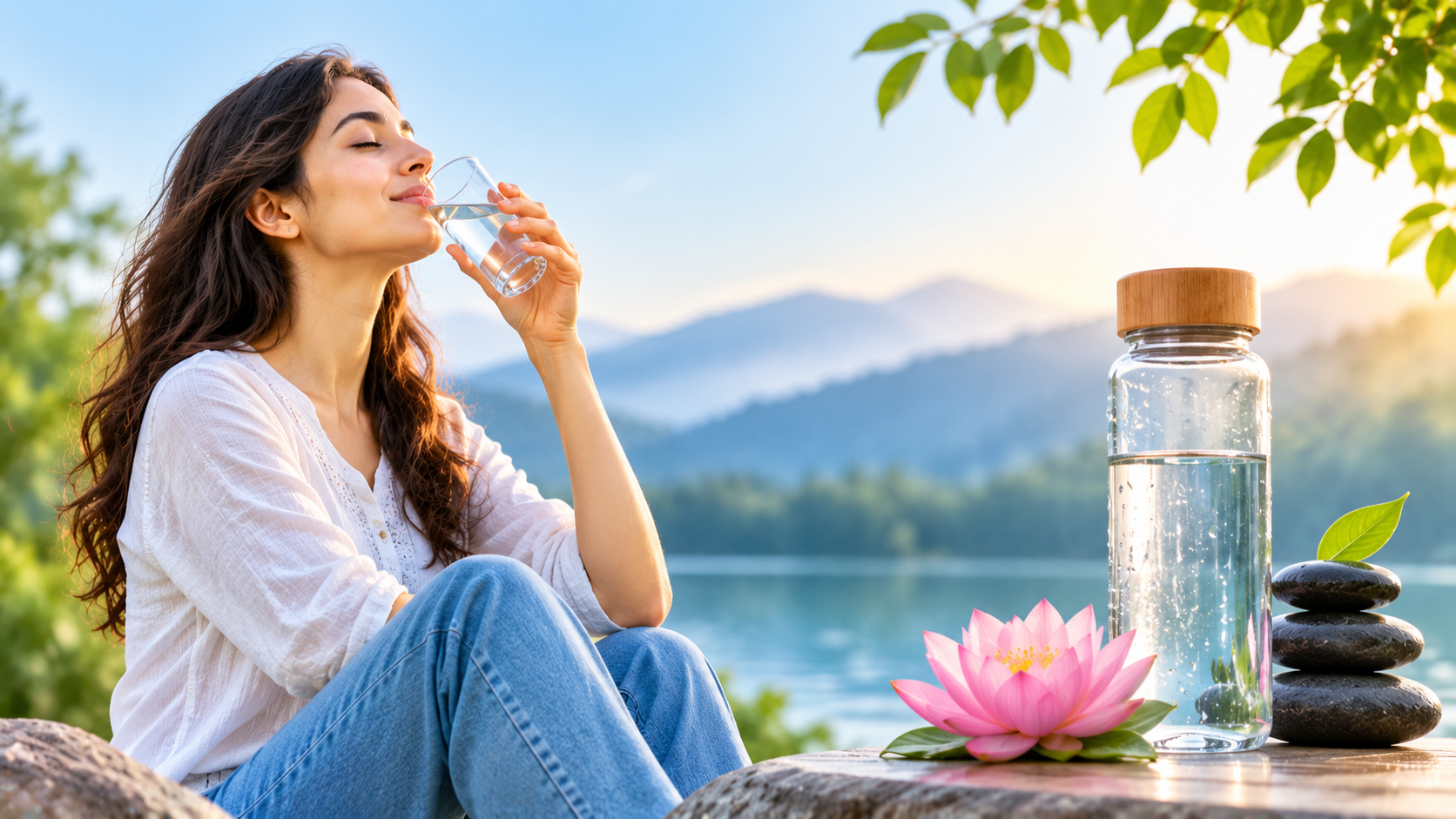
Conscious water drinking brings attention to a routine activity without requiring a long meditation or formal ceremony. You can try it in a way that fits your day:
- Pause briefly and notice why you are reaching for water, such as thirst or a regular break.
- Observe the water’s temperature, taste and appearance. Notice the glass in your hand and the setting around you.
- Drink normally and take a moment to reflect on the experience, without expecting to feel anything unusual.
Mindful attention does not change the basic need to drink enough safe water. Water requirements vary from person to person and with factors such as activity, climate and individual circumstances. A conscious practice should never delay drinking when you are thirsty or replace appropriate health advice.
Hydration Rituals and Conscious Hydration
Hydration rituals are small, repeatable actions that give a familiar routine personal meaning. Some people take a quiet pause before their first glass of water in the morning.
Others express gratitude, say a prayer, or take a moment away from a screen. There is no single correct method and no special phrase is required.
Conscious hydration can be as simple as choosing one regular moment to pay attention. You might notice the water, reflect on where it comes from, or consider what it means in your family or cultural tradition.
Some people choose to incorporate a Quantum Water Charger into their hydration rituals, exploring how a focused, mindful practice feels with different tools and approaches. The emphasis is always on the meaning you bring to the experience, not on a promised result.
Water, Mindfulness and Personal Reflection
Mindfulness involves paying attention to present experience with an open, non-judgemental attitude. Drinking water offers familiar sensations that are easy to overlook when we are busy. You can notice your hand lifting the glass, the temperature of the water and the act of swallowing. If your attention wanders, simply return it to the moment.
Some people use these pauses to reflect on their habits or express gratitude for access to clean water. Others focus on water’s place in the natural world, including the rivers, lakes and systems that make water available. These are personal and educational ways to engage with something we encounter every day.
Frequently Asked Questions
What Does Water Consciousness Mean?
Water consciousness means paying attention to how we drink, observe and relate to water. It may include sensory awareness, cultural traditions, symbolism and personal reflection. It does not require any specific belief about water.
How Is Conscious Water Drinking Different from Regular Drinking?
Conscious water drinking adds deliberate attention to an ordinary activity. You might notice the temperature, taste and setting rather than drinking while distracted. It does not change your basic hydration needs.
What Are Hydration Rituals?
Hydration rituals are personal actions that bring intention or meaning to drinking water. They can be as simple as pausing, noticing the water or expressing gratitude. They do not need to follow a fixed method.
Does Human Intention Change the Physical Properties of Water?
Research and interpretations in this area vary. Some researchers have explored this question through photography, experimental observation, and naturalist study. Personal meaning and experience are valuable in their own right and do not need to be framed as scientific proof.
How Can I Begin a Conscious Water Practice at Home?
Choose a convenient moment, reduce distractions if practical and notice the water as you drink. Keep the routine flexible and continue to meet your normal hydration needs. No special equipment is required.
Continue Exploring
Water consciousness begins with curiosity about something familiar. To explore further, visit Crystal Water Experience, learn about our water consciousness courses, or see how some people incorporate a Quantum Water Charger into their hydration rituals. These resources invite exploration and do not promise physical effects or measurable outcomes.