
The most effective water filtration methods designed to deliver pure, safe drinking water for your home. Modern water filter systems remove harmful contaminants such as bacteria, heavy metals, chemicals and chlorine, improving both taste and safety. From reverse osmosis to activated carbon and UV purification, the right solution ensures cleaner hydration, better health and long term protection for you and your family.
In this guide, we explore the most effective ways to water filtration, helping to keep your body healthy.
Importance of Clean Drinking Water and
Clean water drinking is essential for good health and everyday wellbeing. It supports hydration, digestion and normal bodily functions, while helping regulate body temperature and remove waste from the body. Without safe water, the risk of dehydration and illness increases significantly.
Contaminated water may contain bacteria, viruses, parasites, heavy metals and harmful chemicals. Drinking unsafe water can cause waterborne diseases and long-term health problems. This is why effective water clean systems are important for homes and businesses across the UK.
Reliable water filtration helps remove harmful contaminants, improves taste and odour, and ensures a safer supply of drinking water. Investing in a reliable purification system is a practical step towards protecting your health and maintaining high water quality standards.
Overview of Water Contaminants
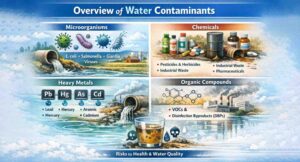
Water contaminants come from a range of sources, including industrial activity, agricultural runoff and natural environmental processes. Understanding what may be present in your water supply is essential when choosing the right water filtration system. Common contaminants include microorganisms, chemicals, heavy metals and organic compounds, all of which can affect water quality and health.
Microorganisms such as bacteria, viruses and protozoa are among the most serious concerns in drinking water. For example, pathogens including E. coli, Salmonella and Giardia can cause gastrointestinal illness, while viruses such as norovirus and hepatitis A may lead to more severe infections. In many cases, contamination occurs through sewage leaks, agricultural runoff or insufficient water treatment. Therefore, effective water filtration must remove or neutralise these harmful organisms to ensure safe drinking water.
In addition to biological threats, chemical contaminants also pose significant risks. These include pesticides, herbicides, industrial chemicals and pharmaceutical residues, which can enter water sources through farming activities, manufacturing processes and improper waste disposal. As a result, long-term exposure may increase the risk of neurological damage, hormone disruption and certain cancers. Reliable water filter systems are essential for reducing these chemical risks.
Furthermore, heavy metals such as lead, mercury, arsenic and cadmium may enter water through natural deposits or ageing pipework. Even at low levels, they can accumulate in the body and cause kidney damage, developmental issues and other serious health conditions. Moreover, organic compounds such as volatile organic compounds (VOCs) and disinfection by-products (DBPs) can compromise water safety. Consequently, effective water filter plays a vital role in removing these contaminants and maintaining high standards of drinking water quality in the UK.
Types of Water Filtration Methods
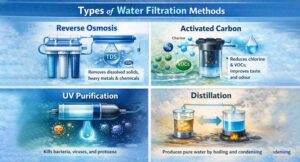
There are several water filtration methods available, each designed to address different water quality concerns. For example, the most common systems include reverse osmosis, activated carbon filtration, UV purification and distillation. Therefore, understanding how each method works is essential when selecting the most suitable solution for your home or business.
Reverse osmosis (RO) is highly effective at removing dissolved solids, heavy metals and many chemical pollutants. It uses a semi-permeable membrane to separate contaminants from clean water, making it a strong option for comprehensive treatment.
Activated carbon filtration improves taste and odour by reducing chlorine, VOCs and certain chemicals. However, it is less effective at removing dissolved salts or microorganisms.
UV purification focuses on microbial safety by inactivating bacteria, viruses and protozoa using UV-C light. It does not remove chemical contaminants, so it is often combined with other systems.
Distillation removes impurities through heating and condensation, effectively separating heavy metals and dissolved solids. Although highly effective, it can be slower and more energy-intensive than other water filtration methods.
Some people also use Shungite water stones as a natural approach to improving water quality. Shungite is a carbon-rich mineral that is believed to help reduce certain impurities and improve taste. However, it is not a certified water filter system and should not replace proven purification methods where safe drinking water standards are required.
Reverse Osmosis Water Filtration
Reverse osmosis (RO) water filtration is one of the most widely used and effective water purification methods available today. The process involves forcing water through a semi-permeable membrane that acts as a barrier to contaminants. The membrane’s tiny pores allow water molecules to pass through while blocking larger particles, such as bacteria, viruses, dissolved salts, and other impurities. The result is clean, purified water that meets high-quality standards.
One of the key advantages of reverse osmosis filtration is its ability to remove a broad spectrum of contaminants. RO systems are particularly effective at reducing total dissolved solids (TDS), which include minerals, salts, and metals that contribute to water hardness and poor taste. Additionally, RO membranes can effectively remove harmful substances such as lead, arsenic, fluoride, nitrates, and pesticides. This makes reverse osmosis an excellent choice for households concerned about multiple types of contaminants.
Despite its effectiveness, reverse osmosis filtration has some limitations. The process can be relatively slow, requiring several stages to achieve optimal purification. Additionally, RO systems typically produce a significant amount of wastewater, as only a portion of the input water is converted into purified water. This can be a consideration for regions with water scarcity or for individuals looking to minimize water waste. However, advancements in RO technology have led to more efficient systems that reduce water wastage and improve overall performance.
Maintenance is another important aspect of reverse osmosis filtration systems. Regular replacement of the RO membrane and pre-filters is necessary to ensure consistent water quality and system longevity. While this maintenance can be an added expense, the benefits of having access to purified water often outweigh the costs. Furthermore, many modern RO systems come with user-friendly features and indicators that make maintenance easier and more convenient for homeowners.
Activated Carbon Water Filtration
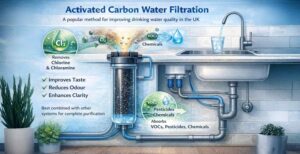
Activated carbon water filtration is a widely used method for improving drinking water quality. It uses highly porous carbon to absorb impurities, chlorine and unwanted substances from the water. This system is popular in UK homes and businesses because it enhances taste, reduces odour and improves overall water clarity, making mains water cleaner and more pleasant to drink.
Activated carbon filters are particularly effective at removing chlorine and chloramine, which are commonly added to mains water for disinfection. By reducing these chemicals, water becomes fresher and more pleasant to drink. This filtration method also helps remove volatile organic compounds (VOCs), pesticides and certain industrial chemicals that may affect water quality.
However, activated carbon water filter is less effective at removing heavy metals, dissolved salts and bacteria. For more complete treatment, it is often combined with systems such as reverse osmosis or UV purification. Regular filter replacement is essential to maintain performance and ensure consistent, high-quality drinking water.
UV Water Filtration and Purification
UV water filtration and purification is a highly effective method for disinfecting drinking water using ultraviolet light. This system exposes water to UV-C light, which penetrates harmful microorganisms such as bacteria, viruses and protozoa. The light damages their DNA, preventing them from reproducing and effectively neutralising waterborne pathogens. As a result, UV water filter provides strong protection against microbial contamination.
One of the main advantages of UV water purification is that it works without adding chemicals to the water. Unlike chlorine-based treatments, UV systems do not leave behind chemical residues or by-products. They also do not affect the taste, smell or appearance of the water, making it a safe and environmentally friendly solution for UK homes and businesses.
UV systems operate quickly and treat water in real time, providing a continuous supply of disinfected drinking water. They are generally low maintenance, requiring only periodic replacement of the UV lamp to maintain performance.
However, UV water filtration is designed specifically for microbial control and does not remove heavy metals, dissolved salts or chemical pollutants. For full water purification, it is often combined with systems such as activated carbon or reverse osmosis. Pre-filtration may also be necessary where water contains high levels of sediment or turbidity, as particles can reduce UV light effectiveness.
Distillation of Water Filtration
Distillation water filter is a traditional and highly effective method of purifying water through heating and condensation. The process involves boiling water to create steam, which is then cooled and condensed back into liquid form, leaving contaminants behind in the boiling chamber. This method removes dissolved solids, heavy metals and many chemical pollutants, producing highly purified drinking water.
One of the main advantages of distillation water filtration is its ability to eliminate a wide range of impurities. As water turns into steam, bacteria, viruses, salts and heavy metals are separated from the purified water. This makes distillation suitable for environments that require very high water quality, including laboratories and medical facilities.
Distillation systems are relatively simple in design, typically consisting of a heating element, boiling chamber and condenser. With fewer components and no reliance on disposable membranes, maintenance can be straightforward compared to some other treatment systems.
However, distillation can be energy-intensive and slower than other methods, as it requires heating water to boiling point and cooling the steam. It may also be less effective at removing certain volatile organic compounds with low boiling points. For more comprehensive treatment, it is sometimes combined with other purification systems to enhance overall performance.
Comparison of Water Filtration Methods
When selecting a water filtration system, it is important to assess the specific contaminants in your water supply and the level of purification required. Choosing the right water filtration solution depends on understanding your water quality and the type of treatment needed.
Reverse osmosis (RO) systems are highly effective at removing dissolved solids, heavy metals and many chemical pollutants. They produce low total dissolved solids (TDS) water, making them a strong choice for households seeking thorough purification. However, RO systems can generate wastewater and require regular maintenance to maintain performance.
Activated carbon filters are particularly effective at reducing chlorine, volatile organic compounds (VOCs) and certain chemicals. They significantly improve taste and odour but are less effective at removing heavy metals, dissolved salts and microorganisms. For this reason, they are often combined with other treatment systems.
UV systems focus on microbial safety by inactivating bacteria, viruses and other pathogens without adding chemicals. While highly effective for disinfection, they do not remove chemical contaminants or dissolved solids. Pre-filtration may be required if water contains sediment.
Distillation provides a high level of purification by separating water from dissolved solids and heavy metals through heating and condensation. However, it can be energy-intensive and slower than other methods. In many cases, combining different technologies provides the most complete water filter approach for safe, clean drinking water.
Conclusion and Recommendations
Access to clean drinking water is essential for protecting health. Contaminated water may contain microorganisms, chemicals, heavy metals and organic compounds, making it important to choose the right water filter method for your needs. The most common systems include reverse osmosis, activated carbon filtrer, UV purification and distillation, each designed to address specific water quality concerns.
Reverse osmosis removes dissolved solids, heavy metals and many chemical pollutants. Activated carbon improves taste and reduces chlorine and VOCs. UV purification neutralises harmful bacteria and viruses, while distillation removes dissolved impurities through heating and condensation.
Selecting the right solution depends on your water supply and the level of purification required. In many cases, combining filtration methods provides more complete protection and ensures safe, high-quality drinking water for your home or business.