
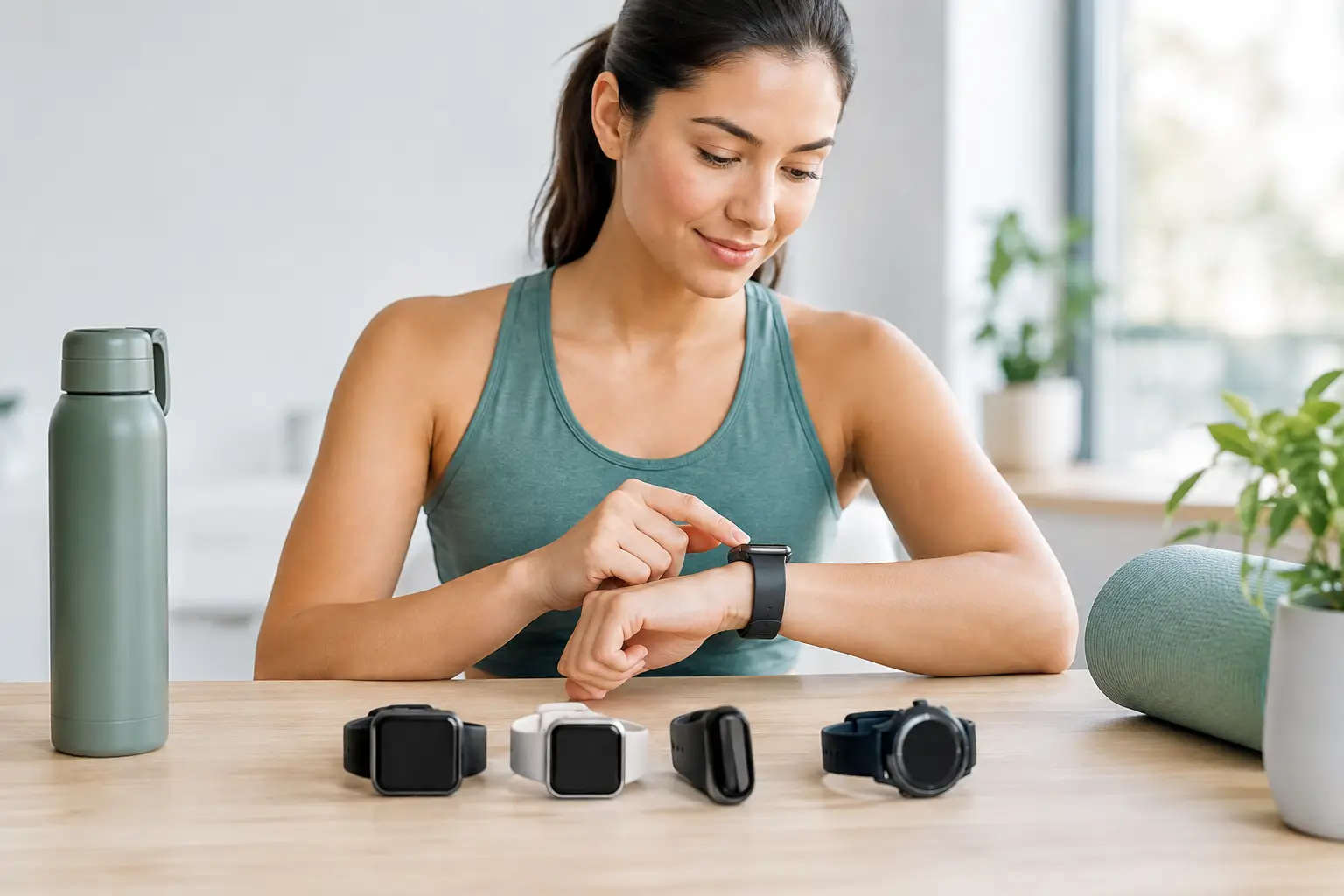
A pendant can become the object you reach for before a crowded train journey. A bracelet can call you back to your breath during a demanding conversation. The right wearable is not simply an accessory – it is a chosen point of contact with your intention. This wearable wellness buying guide is for people who want to select those tools with discernment, rather than collecting another drawer-full of beautiful objects with no real relationship to their practice.
Wearables cannot do your inner work for you. What they can offer is a tangible ritual, a sensory reminder and, depending on the technology or materials involved, a way to explore your relationship with frequency, grounding and the biofield. The most supportive choice is rarely the loudest claim. It is the piece you will genuinely wear, observe and work with consistently.
Begin with the energy you want to cultivate
Before comparing materials, aesthetics or price points, name the quality you are seeking. Are you looking for a sense of grounding when your day becomes screen-heavy? Do you want a physical anchor for meditation, emotional boundaries or greater presence? Are you curious about frequency-based tools and want to begin a more intentional exploration of your energetic field?
This distinction matters because one wearable cannot need to be everything. A person building a grounding ritual may favour a simple piece that feels substantial and easy to wear close to the skin. Someone who feels called to frequency work may be more interested in a wearable designed around a specific energetic intention. A practitioner may need something neutral, professional and appropriate for long sessions with clients.
Try finishing this sentence before you buy: “I want this wearable to remind and support me to…” The answer should be clear enough to guide your decision. “Feel better” is broad. “Pause before I absorb the mood of a room” is usable.
What to consider in a wearable wellness buying guide
The wellness market can blur together jewellery, symbolic objects, grounding products and frequency technologies. They may all belong in an intentional lifestyle, but they are not interchangeable. Look at what a wearable is actually designed to do, then decide whether that purpose meets your present need.
Material is part of the relationship
Natural stones, metals, textiles and other materials each bring a different tactile and symbolic experience. You may be drawn to the cool weight of a pendant, the texture of a bracelet bead or the clean simplicity of a metal piece. There is no universal material that is right for every person. Your body and daily life are part of the equation.
Consider skin sensitivity, weight, clasp style and whether the item will hold up to ordinary movement. If you need to remove it for showering, exercise or sleep, will you remember to put it back on? A tool that stays in a drawer cannot become a dependable part of your energetic practice.
If a piece uses crystals or other natural materials, appreciate their beauty and personal meaning without expecting them to replace medical care, mental health support or practical changes in your environment. Conscious wearables work best alongside grounded choices: rest, hydration, nourishing food, movement, boundaries and appropriate professional support when needed.
Technology deserves clear questions
Frequency and EMF-conscious wearables often appeal to people who are sensitive to modern environments or seeking more agency in a highly connected life. The language around these products can be compelling, so let clarity lead.
Ask how the product is made, what technology it contains and what the creator means by terms such as quantum, frequency, biofield support or EMF defence. Is the intended use explained in practical terms? Are there care instructions? Does the company distinguish personal experience from medical diagnosis or guaranteed outcomes?
Be especially wary of fear-based messaging. Technology saturation is a valid reason to examine your habits and create more restorative space, but panic does not create energetic sovereignty. A wearable should support your capacity to choose, regulate and stay present – not make you feel helpless without it.
Design determines consistency
A daily wearable needs to fit your actual life, not only your ideal morning ritual. Think about your work, your clothing, your movement and the places where you most want support. If you work with your hands, a pendant or subtle chain may be more practical than a bracelet. If you are frequently outdoors, durability and a secure fastening matter. If you prefer discreet tools, choose a design that feels like your own rather than an announcement.
Notice whether the piece makes you feel more like yourself. This is not superficial. When a wearable feels aligned with your identity, you are more likely to wear it with ease and associate it with the practice you intended.
Look for integrity rather than perfection
A well-made wearable wellness tool should come with enough information for you to make a conscious decision. This includes the materials, manufacturing approach, intended use and realistic care needs. Thoughtful brands do not need to hide behind vague mystery. Spiritual technology can honour the unseen while still communicating clearly.
Price is also worth holding with discernment. A higher price may reflect specialised processes, craftsmanship, materials, small-batch production or education around the tool. It does not automatically prove that a product is more powerful for you. Equally, the least expensive option may be poorly made, uncomfortable or disconnected from any meaningful intention.
Set a budget that allows you to choose deliberately. If a piece is beyond your reach, begin with a simpler object and establish the ritual first. Your attention is not a lesser ingredient. The clarity you bring to a tool shapes how consistently you use it.
Test through observation, not expectation
Once you choose a wearable, give yourself a defined observation period. Two to four weeks is often enough to notice whether the piece serves a real purpose in your day. Wear it in the settings that matter: at your desk, during travel, in meditation, while facilitating, or during social time.
Keep the practice simple. At the beginning and end of the day, pause for a few breaths and ask: How does my body feel? What is my mood? Where is my attention? Do I feel more able to return to my centre? You are not trying to force a dramatic result. You are building frequency literacy through honest self-observation.
A short journal can be useful, particularly if you are sensitive to subtle shifts. Record sleep quality, emotional tone, focus and moments when you naturally touched or noticed the wearable. Patterns may emerge, or you may simply discover that the piece is not for this season. Both outcomes are valuable information.
Avoid making a single difficult day mean that a wearable has failed, or one uplifting moment mean it has transformed everything. Human energy is influenced by relationships, hormones, weather, workload, nourishment, grief, joy and countless other conditions. Discernment means respecting that complexity.
Build the wearable into a living practice
The deepest value of a wearable often comes from the practice it holds. You might place your pendant in your hands before meditation and set an intention for clear boundaries. You might touch your bracelet before opening a demanding message, letting it remind you to soften your jaw and feel your feet. You might remove your wearable at night as a conscious signal that the day is complete.
For those exploring frequency-based tools, pair the wearable with education rather than relying on a product alone. Learning how you experience your own biofield, how to ground, and how to work with intention gives context to the object. Crystal Water Experience approaches this relationship as an invitation to participate in your energetic wellbeing, not to hand your authority to a device.
Your practice can remain beautifully modest. A few seconds of awareness, repeated with sincerity, can turn an accessory into a meaningful threshold between reactivity and choice.
When not to buy yet
Sometimes the most sovereign choice is to wait. If you are buying from anxiety, chasing a promised fix or feeling pressured by scarcity, step back. Return to the question of what you truly need. You may discover that more sleep, less screen exposure, a boundary with someone, or a few minutes outdoors will support you more immediately.
Likewise, if you have a health concern, use qualified medical guidance rather than treating a wearable as a diagnostic or treatment tool. Energetic practice and conventional care can sit alongside one another without confusion about their roles.
Choose the wearable that helps you remember your own centre, then let your lived experience be the teacher. The most resonant piece will not ask you to surrender your discernment. It will invite you to practise it, one conscious moment at a time.