
Water is already part of your daily rhythm. The difference with a charged-water practice is that you meet this ordinary act with attention, intention and a willingness to observe. Learning how to prepare charged water is less about performing a perfect ritual and more about creating a clear relationship with the water you drink – and with the energetic state you bring to it.
For people exploring water consciousness, this can become a simple point of return. Before a busy commute, a client session, meditation or sleep, charged water offers a tangible way to pause, ground and choose the quality of energy you want to cultivate.
What does charged water mean?
Charged water is water that has been intentionally exposed to a chosen energetic input. Depending on your practice, that input may be focused awareness, spoken intention, sound, sunlight, earth contact, crystals or frequency-based technology. Within an energetic framework, water is approached not only as hydration, but as a receptive medium that can participate in ritual, coherence and conscious direction.
This is not a substitute for clean drinking water, medical care or sensible hydration habits. It is a personal spiritual and wellbeing practice. Its value is often found through direct observation: how does the ritual affect your presence, your felt sense of grounding and the way you relate to your body over time?
The most useful approach is both open and discerning. You do not need to believe every claim you encounter about frequency or structured water to work intentionally with a glass of water. Begin with what you can actually practise, notice and refine.
How to prepare charged water: a clear daily practice
Start with water you genuinely want to drink. Filtered water is a common choice, though the best option depends on your local supply and household setup. Use a clean glass, ceramic or stainless-steel vessel where possible. Many people prefer glass because it feels neutral and lets them see the water clearly, but consistency matters more than chasing a flawless setup.
Place the water somewhere calm. Switch off distractions if you can, or simply step away from the visual noise of screens for a minute. Your nervous system is part of the ritual. If you prepare water while rushed, frustrated and half-reading messages, that is information too – not a failure, just an invitation to slow down.
Take three unhurried breaths. Feel your feet on the floor and soften your shoulders. This grounding step helps move the practice away from abstract ideas and into the body. Energetic sovereignty begins with presence: recognising your own state before reaching for an external tool or solution.
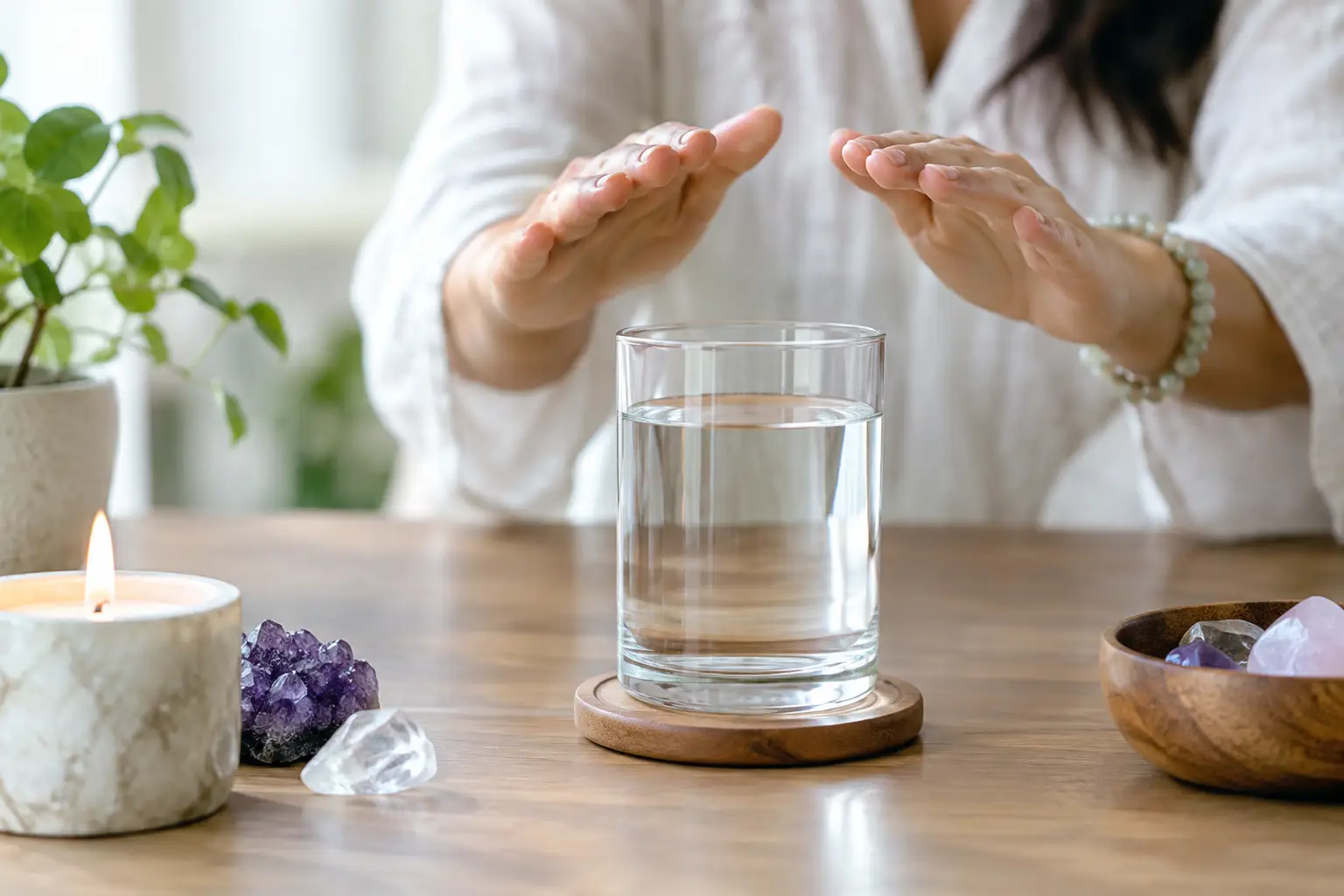
Then place your hands around the glass, without needing to grip it. Bring attention to the space between your palms and the water. Some people notice warmth, tingling or stillness; others notice nothing dramatic. Both experiences are valid. The aim is not to manufacture sensation. It is to become available to your own awareness.
Choose one concise intention. Specific, present-tense language tends to be easier to hold than a long list of wishes. You might silently say, “I welcome steadiness and clarity,” or “May this water support my grounded presence today.” If you are preparing water before a challenging conversation, your intention could be, “I remain centred in my own field.”
Repeat the intention three times, aloud or internally. As you do, visualise the water becoming clear, bright or calm in whatever way feels natural to you. Let the image be simple. Overworking the visualisation can pull you back into mental effort, while charged water is often most potent as a practice of relaxed coherence.
Pause for thirty seconds to two minutes. There is no universal timing rule. A short ritual you return to daily will usually serve you better than an elaborate process you only manage once a month. When you are ready, drink slowly. Notice the temperature, taste and the sensation of swallowing. Let the first few sips be a conscious completion of the practice.
Choosing an energetic input
Intention is enough to begin. As your relationship with charged water develops, you may wish to explore one additional method at a time. This keeps your practice clear. If you use five techniques at once, it becomes difficult to know what feels supportive and what is merely decorative.
Natural light is one option. Placing water in gentle morning sunlight for a brief period can create a beautiful sensory ritual. Avoid leaving drinking water in strong heat for hours, particularly in plastic containers. The purpose is conscious connection, not overheating the water.
Sound is another accessible pathway. You may speak a prayer, hum softly, use a singing bowl nearby or play a piece of music that helps you settle. The question is not whether a particular playlist is objectively the highest frequency. Ask whether the sound brings you into greater presence, spaciousness and integrity.
Earth contact can be especially meaningful when you feel scattered. Sit outdoors with your water, rest it on a natural surface for a few moments, and use the time to feel your breath and the weight of your body. Do not place a drinking vessel directly on soil if it may become contaminated. Grounding is not improved by ignoring practical hygiene.
Crystals are also commonly included in water rituals, but discernment is essential. Not every crystal is safe to immerse in water, and some can release unwanted compounds or degrade. If you choose to work with crystals, keep them beside the vessel rather than in it unless you are certain the material is water-safe and the stone is clean.
For those who want a more consistent technology-supported ritual, a dedicated device such as a Quantum Water Charger can offer a repeatable framework for engaging with frequency. The device does not replace your participation. Your breath, attention and embodied discernment remain central to the experience.
Make the practice personal, not performative
The temptation in spiritual wellness is to collect rituals faster than we embody them. Charged water asks for the opposite. It can be profoundly simple: clean water, a clear vessel, one intention and one minute of honest presence.
Try working with the same intention for seven days. Keep a small notebook and record a few words after drinking: your energy before and after, your emotional tone, the quality of your focus, or anything you notice in meditation. Do not force a positive result. A useful practice reveals what is there, including fatigue, resistance or the need for stronger boundaries.
You may find that different intentions suit different moments. Morning water may be for clarity and direction. Water before a healing session may support steadiness and compassionate boundaries. Evening water may be a cue to release the energetic residue of the day. Let your own life determine the ritual rather than copying someone else’s exact routine.
A note on cleanliness, care and discernment
Energetic practice and practical care belong together. Wash vessels regularly, store water safely and use fresh water when possible. If you add herbs, fruit or minerals, treat it as infused water and follow ordinary food-safety guidance. Do not use charged water to delay treatment for dehydration, illness or any health concern that needs professional support.
It also helps to release the pressure to “get it right”. Water consciousness is not another standard you have to meet. If you forget an intention, drink the water anyway. If your mind is busy, acknowledge it and return to one breath. Coherence is built through compassionate repetition, not spiritual perfectionism.
A glass of charged water may never look different from any other glass on your table. That is part of its quiet power. It invites you to make the invisible visible through choice: to pause, listen and participate in your wellbeing with greater care. Let each sip be a small reminder that your attention is not passive – it is part of how you create a more grounded, sovereign relationship with your day.