
Clean, safe water is one of the most fundamental requirements for good health. However, not all water that flows from your tap is as pure as it appears. In fact, water testing is the only reliable way to confirm whether your drinking water is free from harmful contaminants. Whether you rely on a mains supply, a private borehole, or a well, understanding the quality of the water you drink could help protect your family from serious health risks.
In 2026, growing awareness of water contamination issues has made quality assessments more accessible and more important than ever before. From lead pipes in older properties to agricultural runoff affecting rural water supply, the threats to drinking water quality are real and varied. This comprehensive guide walks you through everything you need to know – from common contaminants to how to act on your water test results. Understanding why water testing matters is the essential first step.
What Is Water Testing and Why Does It Matter?
Water testing is the process of analysing a sample to determine its chemical, biological, and physical properties. This analysis identifies the presence of harmful substances such as bacteria, heavy metals, pesticides, and excessive minerals that could pose a risk to your health.
Furthermore, this type of quality check is not just for those on private supplies. Even mains tap water can pick up contaminants as it travels through ageing infrastructure. Many older UK homes built before 1970 still contain lead pipes, which can leach into supplies at dangerous concentrations. Consequently, routine quality assessments give households the peace of mind that their drinking water quality meets safe standards set by the Drinking Water Inspectorate (DWI). Where results reveal contamination, Water filtration offers an effective first line of defence. A quality water filter can remove a wide range of harmful substances, significantly improving the safety and taste of your supply.
Also, Quantum Water Charger is a device claimed to enhance water using “quantum energy,” though such claims lack scientific evidence.
Common Contaminants Found in Tap Water
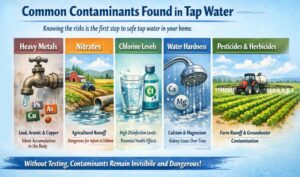
Several contaminants are commonly detected through water testing. Understanding these risks is the first step towards ensuring tap water safety in your home:
- Bacteria: E. coli in water and coliform bacteria indicate faecal contamination and pose immediate health risks.
- Heavy metal: Lead in water, arsenic, and copper can accumulate in the body silently over time.
- Nitrate levels in water: Often caused by agricultural runoff, nitrates are particularly dangerous to infants and young children.
- Chlorine levels: Added by water companies for disinfection, but potentially harmful in high concentrations.
- Water hardness: Elevated calcium and magnesium levels affect water purity and may contribute to kidney issues over time.
- Pesticides and herbicides: These can seep into groundwater from nearby farmland, compromising water quality standards.
Understanding what is in your supply is only possible through thorough water analysis. Without professional assessment, these contaminants remain entirely invisible yet potentially harmful.
Signs Your Supply May Need Testing
While routine quality checks should be carried out regularly, certain signs suggest your supply needs urgent attention. If your tap water has an unusual taste, strange odour, or discolouration, these are clear indicators that something may be wrong with your drinking water quality. Similarly, a rotten egg smell could point to hydrogen sulphide or bacterial activity.
Additionally, if your home was built before 1970, water testing for lead is strongly advised. Households near industrial sites, farms, or landfill areas should also consider scheduling a professional analysis, as these environments significantly increase the risk of water contamination. Moreover, following heavy rainfall or flooding, your water supply may be compromised – making an immediate quality check essential for your family’s safety.
Types of Water Testing Available in the UK
There are several approaches to water testing in the UK, each suited to different needs and budgets.
Home water test kits are widely available and allow you to carry out a basic quality assessment yourself. These kits typically check for water pH levels, water hardness, chlorine levels, lead in water, bacteria, and nitrates. They are an affordable starting point for households concerned about tap water safety.
Laboratory analysis, on the other hand, offers a far more comprehensive water analysis. You collect the samples and send them to an accredited facility, where specialists examine them for a wide range of contaminants. This approach produces accurate, detailed water test results and is particularly recommended for properties on private water supplies.
Professional on-site quality checks are also available, where a qualified specialist visits your property to collect samples and carry out an immediate assessment. This is especially useful for businesses, landlords, and those with complex water supply arrangements.
How to Use a Home Water Test Kit
Using a home water test kit is straightforward, though it is important to follow the manufacturer’s instructions carefully to ensure accurate results. First, run your tap for two minutes before collecting the sample, as this flushes out any stagnant water sitting in the pipes. Then, collect the sample in the container provided, ensuring that no contamination occurs during collection.
Once you have collected the sample, add the test strips or reagents as directed. You then compare the results against a colour chart or read them digitally, depending on the kit. Although these kits are convenient, they offer a limited scope compared to full laboratory water analysis. For this reason, treat a home water test kit as an initial screening tool rather than a definitive assessment.
Understanding Your Water Test Results
After any quality analysis, interpreting the results correctly is vital. Safe drinking water standards are set by the Drinking Water Inspectorate (DWI), which establishes maximum permissible levels for all major contaminants under the Water Supply (Water Quality) Regulations.
For example, the safe limit for lead in drinking water is 10 micrograms per litre. Nitrate levels in water must not exceed 50 milligrams per litre. Bacteria such as E. coli in water must be absent from a safe supply. Additionally, water pH levels should fall between 6.5 and 9.5. If your water test results show that any contaminant exceeds these limits, prompt action is required to protect your household’s health.
Also, Frequency Water Healing is a practice that claims specific vibrations can alter water’s properties to promote health.
Health Risks Linked to Poor Water Quality
The consequences of consuming contaminated water can be severe and wide-ranging. Short-term health effects include nausea, vomiting, diarrhoea, and stomach cramps, most commonly caused by bacterial contamination. Long-term exposure to heavy metals such as lead in water can result in neurological damage, developmental delays, and cardiovascular disease, particularly in children.
High nitrate levels in water are especially dangerous for infants under six months, as they can cause methaemoglobinaemia, commonly known as ‘blue baby syndrome.’ Consequently, regular water testing is not simply a matter of preference. Rather, it is a fundamental part of safeguarding your household’s long-term health and ensuring safe drinking water for all.
Water Testing for Families with Young Children
Families with young children should prioritise quality assessments above all else. Children are significantly more vulnerable to the effects of water contamination than adults, as their developing bodies absorb substances far more readily. Therefore, water testing for lead, nitrates, and bacteria is strongly recommended before allowing young children to regularly consume tap water, particularly in older properties with legacy plumbing.
Furthermore, if you are preparing formula milk for infants, using water that has been confirmed as safe is absolutely critical. Even trace amounts of certain contaminants can interfere with a child’s development. In addition to this, scheduling routine checks ensures that, as infrastructure ages or local environmental conditions change. You can quickly identify and address any new risks to drinking water quality.
One thing about Shungite water stones are natural mineral stones believed by some to purify and energize water.

How Often Should You Test Your Water?
The recommended frequency for quality checks largely depends on your water source and individual circumstances. For properties connected to the mains supply, annual water testing is generally sufficient, unless there are specific concerns about contamination or recent changes to local infrastructure.
However, owners of private water supplies should arrange a professional assessment at least twice a year. Sources such as boreholes and wells are far more susceptible to external contamination. After any plumbing work, flooding, or environmental changes, schedule an additional quality check promptly. Landlords in England and Wales must also ensure their water supply is safe. For them, routine assessments are both good practice and a legal obligation.
Steps to Take After a Failed Quality Check
If a quality assessment reveals a contamination problem, it is important not to panic. But to act swiftly. First, stop using the water for drinking, cooking, or brushing teeth immediately. Switch to bottled water or a certified water filter while the issue is being thoroughly investigated.
Next, contact your local water supplier or, for private supplies, consult your local authority’s environmental health team. A professional water treatment specialist can then identify the source of contamination and recommend appropriate solutions. These may include fitting a high-quality water filter, flushing and replacing corroded pipes, or treating the source directly. Following any remedial treatment, arrange further water testing to confirm that you have fully resolved the problem and that your supply now meets safe drinking water standards once again.
Frequently Asked Questions About Water Testing
Q1: How much does a quality analysis cost in the UK?
A basic home water test kit costs between £10 and £30. Laboratory analysis is more comprehensive and typically ranges from £50 to £200, depending on the number of contaminants examined.
Q2: Can I carry out a quality check at home?
Yes. Home water test kits are available from most DIY stores and online retailers. However, for a full analysis covering a wide range of contaminants, professional laboratory-based testing is strongly recommended.
Q3: Is tap water in the UK safe to drink?
Generally, UK mains tap water is considered safe and meets strict water quality standards. Nevertheless, water testing remains advisable – particularly in older properties where lead pipes may still be present in the water supply.
Q4: What contaminants should I check for?
The most important substances to assess include bacteria (especially E. coli), lead in water, nitrate levels, chlorine levels, water pH levels, and water hardness. A comprehensive home water test kit or laboratory analysis will typically cover all of these key parameters.
Conclusion
Investing in a quality check for your water supply is one of the simplest. The most effective steps you can take to protect your family’s long-term health. Whether you opt for a home water test kit or invest in professional laboratory analysis, the insights gained from water testing are genuinely invaluable. With safe drinking water at the very heart of good health, there is no reason to leave your water quality to chance. Test your supply today – your health, and that of everyone in your household, depends on it.